- Home
- Powder Handling
- Powder Applications
- Food and Beverage
Animal Nutrition - Precision Mixing & Low-Pressure Extrusion
Animal Nutrition - Precision Mixing & Low-Pressure Extrusion
LCI Corporation provides the advanced mixing and extrusion technologies necessary to transform raw ingredients into consistent, nutritionally dense feed that maximizes animal health and production value.
Precision Mixing and Homogeneity
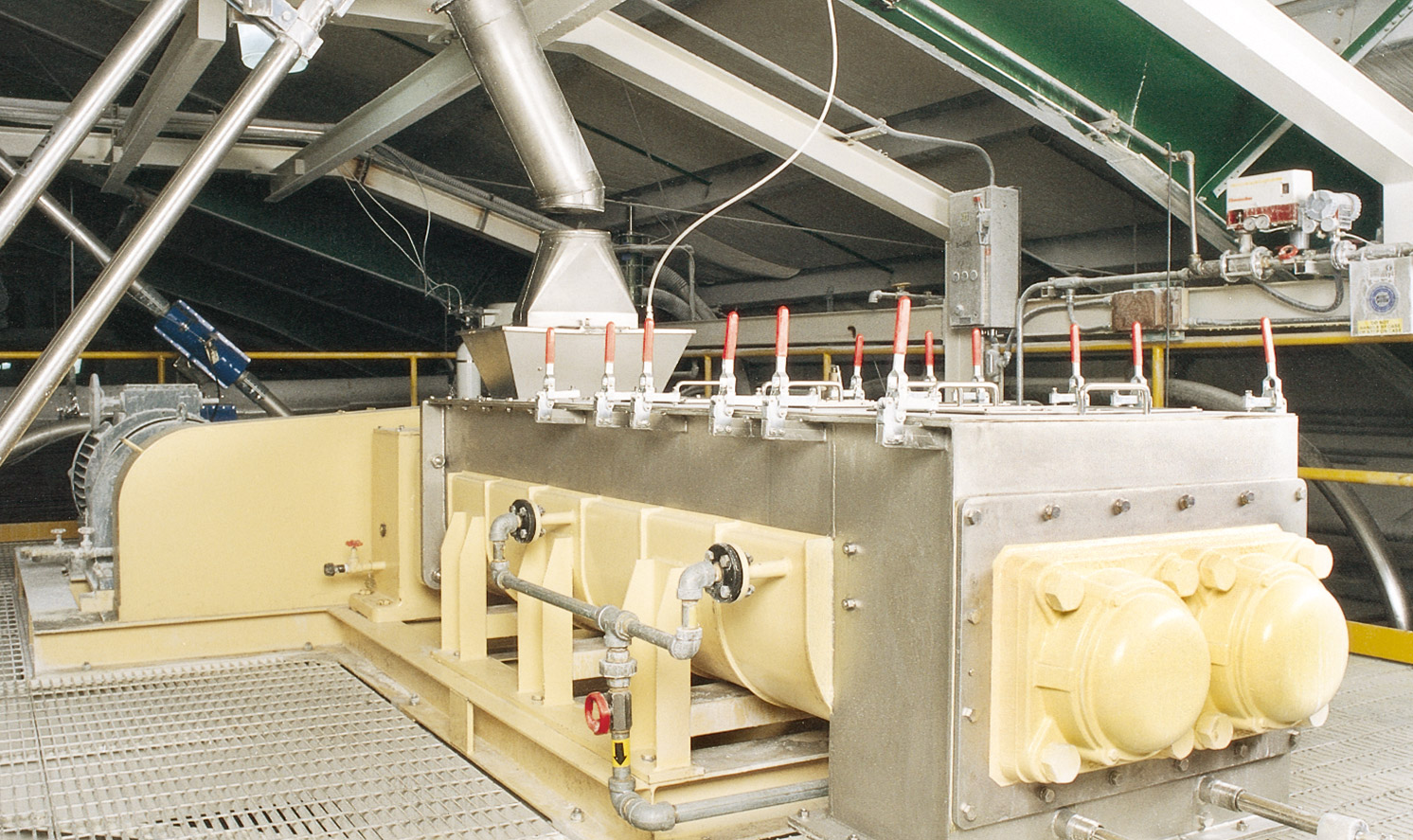
Following grinding, ingredients are weighed into a batch mixer. This is the stage where the precision of your formulation is physically seen. To ensure that a chick or piglet consuming just a few grams of feed receives the exact proportion of nutrients and medications intended, the mixer must achieve a coefficient of variation (CV) of less than 5-10%.
LCI’s precision mixing technology ensures this critical homogeneity is met every time. Whether integrating dry powders or evenly distributing liquids into a mash, our equipment is designed for consistency.
LCI also has Batch & Continuous Kneaders. These are for processes requiring liquid addition (conditioning), LCI Kneaders provide superior dispersive mixing. They ensure moisture is evenly distributed, preventing "hot spots" and creating a homogeneous wet mass ready for downstream processing.
Extrusion and Granulation
Preserving Integrity Through Low-Pressure Processing
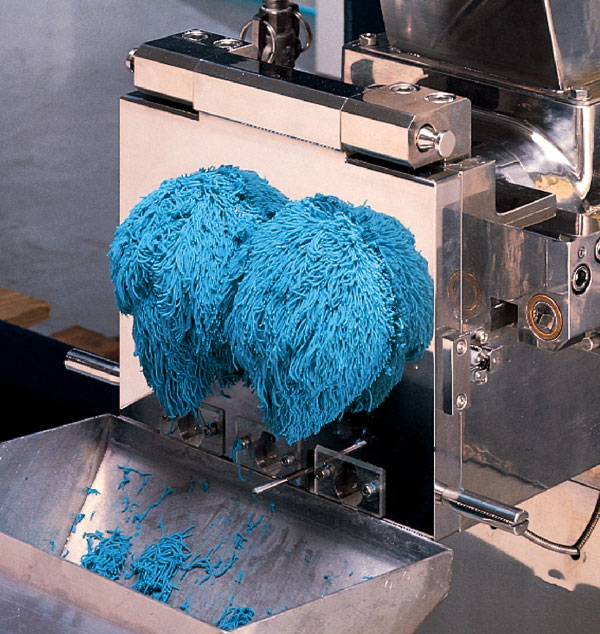
The Twin Dome Granulator (TDG) is the core shaping unit for advanced nutrition. Unlike other methods that rely on high pressure and heat, the Twin Dome Extruder is designed to gently form the conditioned wet mass into uniform, cylindrical granules. Its primary function is to shape the material while preserving the biological activity of sensitive ingredients like enzymes, vitamins, and probiotics.
Mechanics of the Dome Extruder:
The Twin Dome Extruder consists of two counter-rotating screws inside a chamber. The conditioned wet mash is fed into the extrusion zone where the screws transport the material toward a hemi-spherical "dome" die screen. Instead of using rollers to crush material through a die, the twin screws gently wipe the material through the dome screen. This positive displacement action ensures continuous, uniform throughput without the extreme friction associated with pelleting.
Positive Transport The twin screws convey the wet mix in a "plug flow" (First-In, First-Out) manner, ensuring every particle receives the exact same residence time and treatment.
Low-Shear Extrusion: As the material reaches the die, it is extruded through the screen holes at low pressure. This negligible generation of heat ensures that heat-sensitive nutrients are not degraded during the shaping process.
Self-Breaking: As the extrudates emerge from the dome die, they naturally break off by their own weight into consistent lengths, eliminating the need for mechanical cutting knives that can create dust.
LCI offers a distinct advantage in manufacturing medicated feeds and specialty supplements through the Twin Dome Granulator.
Why LCI Dome Extruders?
Temperature Control: The low-pressure operation generates minimal heat, making it the superior choice for feeds containing phytase, probiotics, or antibiotics that would be destroyed by the heat of a standard pellet mill.
Porosity Control: The dome die produces a granule with a porous structure, which improves dissolution and dispersibility in the animal's gut compared to hard, glassy pellets.
Easy Maintenance: The barrel design opens quickly for cleaning, preventing cross-contamination between batches of medicated feed.
Ready to Optimize Your Feed Production?
LCI brings decades of expertise in powder handling and agglomeration. Contact us today to test your feed formulations in our world-class test center.